March 4, 2026



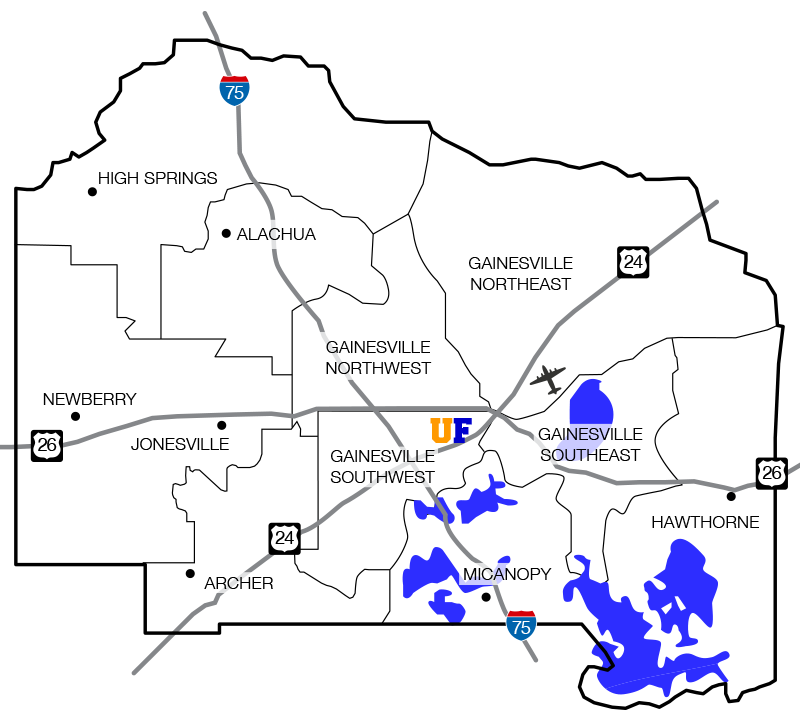
The real estate market in Gainesville and Alachua County, Florida has entered a period of moderation following several years of strong growth during the pandemic housing boom. Demand in the region remains steady, but higher mortgage rates and increasing inventory have slowed price appreciation and created a more balanced market for buyers and sellers.
Home prices in Gainesville remain relatively affordable compared with many other Florida cities. The median listing price in Gainesville is around $290,000, with homes selling for roughly $311,000 on average, depending on property type and location. The broader Alachua County median sale price is roughly $285,000 to $310,000, reflecting a modest decline in some segments over the past year as the market cools from its earlier peak. Average home values in Gainesville are currently about $289,000, down roughly 3% year-over-year, indicating that prices have stabilized after the rapid increases seen from 2020 through 2022.
Inventory levels have gradually increased across the county, giving buyers more choices than they had in recent years. Alachua County currently has around 1,000 to 1,800 homes listed for sale, depending on the time of year, and homes are generally taking 50 to 70 days to sell. In Gainesville specifically, the market has about four to five months of housing supply, which places it close to a balanced market between buyers and sellers.
Despite this slowdown, long-term fundamentals in the Gainesville area remain strong. The University of Florida, the region’s largest employer, continues to attract students, faculty, and research investment that supports housing demand. Growth at UF Health, as well as Gainesville’s reputation as a regional center for education, healthcare, and technology, also contributes to long-term population growth and housing stability.
Overall, the Gainesville and Alachua County real estate market appears to be transitioning from the rapid appreciation of the early 2020s toward a more sustainable pace. While buyers now have greater negotiating power and more available inventory, the region’s strong economic drivers suggest that housing demand will remain steady in the years ahead.